
According to Bloomberg, a terrible bomb during a religious gathering in Pakistan's Khyber-Pakhtunkhwa region resulted in the heartbreaking loss of at least 44 lives, with an additional 150 people injured.
The incident occurred just hours before Chinese Vice Premier He Lifeng arrived in Islamabad for an event commemorating the tenth anniversary of the China-Pakistan Economic Corridor, or CPEC, a huge package in which Beijing has invested billions of dollars in Pakistan.
In recent months, China has aided Pakistan in avoiding a sovereign payment default. However, extremists have attacked Chinese nationals in northeastern Pakistan and abroad.
Introduction:
Tragedy struck the peaceful town of Khar in Pakistan's Khyber Pakhtunkhwa province when a suicide attack on a political convention took the lives of at least 44 people and left over 150 injured. The brutal incident occurred on July 30 during a gathering of more than 400 members of the conservative Jamiat Ulema Islam-Fazl (JUI-F) party. The attack has left the nation in shock and mourning, as investigations point towards the involvement of the banned terrorist group, ISIS.
A bomb exploded during a political event.

The Shocking Attack Unraveled:
As the political convention commenced under a canopy in the border town of Khar, tensions were high due to the JUI-F party's known links to hardline political Islam. The tranquility was shattered when a suicide bomber, hidden among the attendees seated in the front rows, detonated explosives near the convention's stage. Among the victims was JUI-F District Amir Maulana Abdul Rasheed, along with several other prominent party members and workers.
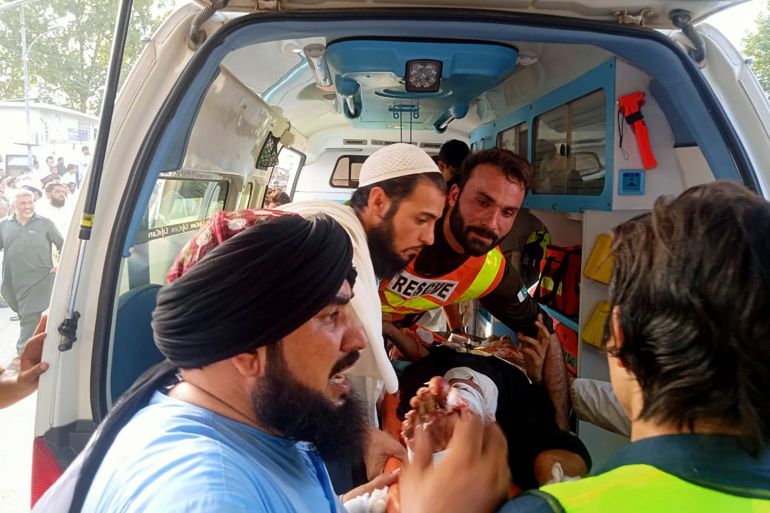
Wounded were taken in critical condition to the main hospital in Khar, Pakistan
ISIS Involvement Suspected:
In the aftermath of the attack, the police launched an intensive investigation to identify those responsible for the horrific act. According to the initial probe, authorities pointed towards the involvement of the banned terrorist group ISIS (Daesh). The bomb disposal squad gathered crucial evidence from the blast site, and the police took three suspects into custody to aid in further investigations.
Pakistan blames ISIS for blast
Human Toll and Emergency Response:
The attack's human toll was devastating, with 44 lives lost and more than 150 people suffering injuries of varying degrees. In response to the crisis, an emergency was declared in hospitals in Bajaur and surrounding areas where most of the injured were taken. Military helicopters were deployed to transport critically injured victims to hospitals in the provincial capital, Peshawar.
The death toll is expected to rise further, given the critical condition of 15 people. The Bajaur District Headquarters Hospital received over 150 injured people, with some requiring referrals to other medical facilities for specialized care. The entire nation was in shock and grief, praying for the departed souls and speedy recovery for the injured.
People gathered outside hospital.

Political and Public Outcry:
The cowardly attack elicited strong condemnation from political leaders and citizens alike. Prime Minister Shehbaz Sharif expressed his condolences and vowed to identify and punish those responsible. He assured the nation that the authorities, along with law enforcement agencies, would not allow such acts of terror to succeed. President Arif Alvi also joined in the prayers for the victims' souls and emphasized timely medical assistance for the injured. Neighboring country India always warned Pakistan to curb terrorism, which every government took it lightly. India blames Pakistan using it's soil for terrorism.
Calls for Investigation and Counter terrorism Measures:
In the wake of the attack, the Pakistani nation demands answers and justice. Khyber Pakhtunkhwa caretaker Chief Minister Azam Khan sought a detailed report from the police and visited the injured at the Combined Military Hospital in Peshawar. Leaders from various political parties, including Imran Khan, expressed their grief and called for a review of the country's counter terrorism priorities.
Pakistan Blast: Islamic State Claims Responsibility For Bombing

Terrorism Challenges in Pakistan:
The tragic incident highlights the ongoing challenges Pakistan faces in countering terrorism. Following the Taliban's return to power in Afghanistan in August 2021, Pakistan has experienced an increase in terrorist attacks. The need for enhanced security measures and cooperation among regional nations is paramount to combating the menace of terrorism.
Factors Contributing to Terrorism in the Region:
The region's geopolitical situation, with Pakistan sharing a porous border with Afghanistan, has historically been vulnerable to cross-border terrorism. The resurgence of the Taliban in Afghanistan has further complicated the security situation in both countries. The presence of various extremist groups, including ISIS, Al-Qaeda, and Tehrik-i-Taliban Pakistan (TTP), poses significant challenges to regional stability.
Impact on Pakistan's Security and Society:
The relentless wave of terrorist attacks has had a profound impact on Pakistan's security and society. Innocent lives are lost, families are shattered, and communities are left in fear. The economy suffers due to disruptions in daily life, while the country's international image is tarnished, affecting tourism and foreign investment.
Counter terrorism Measures and Challenges:
In response to the escalating terrorist threats, Pakistan has implemented counter terrorism measures, including military operations, intelligence-sharing agreements, and targeted operations against extremist elements. While these efforts have shown some success in reducing terrorism incidents, challenges persist.
One challenge lies in effectively coordinating with neighboring countries to address cross-border terrorism and intelligence-sharing. Additionally, radicalization of vulnerable individuals within Pakistan remains a concern, necessitating comprehensive strategies for countering extremist ideologies.
The Need for National Unity and International Cooperation:
To combat terrorism effectively, national unity is crucial. Political leaders, civil society, religious scholars, and citizens must come together to reject violence and extremism. Strengthening intelligence and law enforcement agencies, improving border security, and addressing root causes of extremism, such as poverty and lack of education, are essential steps in building a more resilient society.
A Call for Comprehensive Counter-Terrorism Policies:
India has always advocated for comprehensive counter terrorism tactics that address not only the symptoms of terrorism but also the core causes. To effectively combat terrorism, social, economic, and political elements that contribute to radicalization and violent extremism must be addressed. India has urged Pakistan to take robust action against all terrorist organizations functioning on its soil and to prevent these organizations from carrying out strikes on any neighboring country.
Increasing Regional Cooperation:
The attack in Khar serves as a sobering reminder of the importance of increased regional collaboration in combating terrorism. India has called for a South Asian united front.
Emphasizing the Importance of Peace and Stability:
Amid rising terrorist incidents in the region, India has emphasized the importance of promoting peace and stability. Sustainable peace is essential for the progress and development of South Asia. India has stressed the need for resolving conflicts through dialogue and peaceful means, thereby ensuring that extremist elements do not exploit grievances for their nefarious designs.
Conclusion:
After an ISIS-backed suicide attack on a political conference in Khar, Pakistan has been in mourning. The country mourns the loss of innocent lives and prays for the rapid recovery of those injured. As investigations continue, authorities must strive tirelessly to bring the culprits to justice while simultaneously protecting the public.
Terrorism remains a collective duty, and the country must work together to prevent similar atrocities in the future. Only through unity and coordinated efforts will Pakistan be able to overcome the difficulties posed by terrorism and achieve a safer and more secure future for its citizens.
Quote for this topic :-Terrorism Is Not a Heroic Act!. No Biblical Principles Support Human Killing!


No comments:
Post a Comment