"Karima's Untimely Death: A Wake-Up Call for Hidden Issues"

Canadian Prime Minister Faces Backlash for Silence on Hidden and Trending Activist Karima's Tragic Demise


Introduction


In an era where social activism continuously shapes the world, the unexpected demise of Italian-Moroccan activist Karima sent shock waves through global communities. Karima's relentless commitment to hidden and trending social justice issues had earned her immense popularity, both in Italy and across borders. However, the conspicuous silence of Canadian Prime Minister Justin Trudeau in response to this heartbreaking incident has left many perplexed. Notably, a prominent Italian journalist Francesca Marino
recently took a bold stance and criticized Trudeau for his silence. In this blog post, we will delve into the details of Karima's influential legacy, the circumstances surrounding her tragic demise, and the concerns raised by the Italian journalist regarding Trudeau's silence.

Karima Baloch, 37, was granted asylum in Canada in 2016 after her work as a human rights activist in the troubled Pakistan state of Balochistan had led to her being followed and threatened by the authorities.

Activist Karima

Who Was Karima Baloch? Human Rights Council Questions Trudeau's Silence On  Baloch Death, After Nijjar Coverage 


                                                                        Justin Trudeau
Sean Gallup/Getty Images


Karima: A Beacon of Hope for Hidden and Trending Issues


Karima, an Italian social activist of Moroccan heritage, was a beacon of hope for marginalized communities, championing hidden and trending social justice causes. Her unwavering dedication to addressing issues such as systemic discrimination, inequality, and injustice had garnered her immense respect and admiration. Through grassroots initiatives, innovative educational programs, and impactful awareness campaigns, Karima made it her life's mission to create a fairer and more inclusive society for all.

The Tragic Incident


On Karima
Baloch was last seen alive on 20 December 2020. On 22 December 2020, her dead body was found submerged at the Toronto Waterfront, Canada., tragedy struck when Karima was involved in a fatal accident. The circumstances surrounding her untimely demise are still under investigation, and available details remain limited. However, the profound impact of her loss has reverberated across borders. Her tragic passing has left a void in the global social justice movement, and many of her ardent supporters are demanding answers and justice.

Justin Trudeau's Deafening Silence

In the midst of the ongoing diplomatic schism between India and Canada, an Italian writer and author Francesca Marino called Canadian Prime Minister Justin Trudeau a clown. She criticized him for his hypocrisy, claiming that he is silent about the death of human rights activist Karima Baloch while speaking out against Khalistani terrorist Hardeep Singh Nijjar's death. 

The Indian media attempted to link Khalistani Hardipsingh Nijjar to a neighboring country, and the same country which evicted Karima after she was named one of the BBC's 100 most inspirational and influential women of 2016 for her efforts in human rights.


In the wake of Karima's tragic demise, numerous world leaders, politicians, and influential public figures expressed their condolences and paid tribute to her invaluable contributions to society. However, one conspicuous absence in this outpouring of support was Canadian Prime Minister Justin Trudeau. Despite his established reputation as a staunch advocate for diversity, inclusion, and social justice, Trudeau chose to remain silent on the matter, creating an alarming dissonance between his professed values and actions.

Notably, Italian journalist
Francesca Marino, renowned for her unwavering commitment to fearless reporting and holding leaders accountable, did not hold back in her recent op-ed piece. She criticized Trudeau's silence and highlighted the inconsistency between his proclaimed values and his actual conduct. [Journalist's Name] boldly questioned whether Trudeau's silence was politically motivated, related to diplomatic relations, or a mere oversight. She emphasized that leaders should consistently champion the causes they claim to hold dear, especially when it concerns hidden and trending issues that need attention.

Italian journalist Francesca Marino

Meet Francesca Marino, the Italian journalist who called Pakistan's bluff  on Balakot


The journalist further urged Trudeau to publicly acknowledge 
Karima's tragic demise and reaffirm his commitment to the hidden and trending causes she passionately advocated for. Francesca Marino, is same who exposed Pakistan's bluff on Balakot.

A Demand for Leadership Accountability


Karima's untimely demise serves as a stark reminder of the challenges faced by social activists who dedicate their lives to hidden and trending causes. Moreover, it underscores the pressing need for leaders to acknowledge and address such losses responsibly. The call for leadership accountability transcends mere condolences; it represents a call for leaders to wholeheartedly uphold the values they claim to represent, particularly in the context of hidden and trending social justice issues.


                                                Leadership Accountability

Accountability


Conclusion

Source

Don't hide the truth, because the more you keep it in, the: OwnQuotes.com


Canadian Prime Minister Justin Trudeau's silence in response to the tragic passing of hidden and trending activist Karima has generated valid concerns and ignited an essential conversation about leadership, accountability, and social justice. While the details surrounding Karima's unfortunate death remain under investigation, her legacy as a fervent advocate for a more equitable and inclusive world continues to inspire. This legacy reminds us all of the significance of unwavering commitment to hidden and trending causes, even when faced with adversity. As the world mourns the loss of this remarkable activist, we hope that leaders like Trudeau will contemplate their role in supporting and amplifying the voices of those who tirelessly strive to address hidden and trending issues and make the world a better place.

"Hidden and Trending News: Canada's Dueling Controversies"

"Canada Under Scrutiny: The Dual Controversies of Terrorist Safe Havens and Honoring a Nazi-Linked Veteran"

Introduction


In recent times especially after G20 summit held in India recently, Canada has found itself embroiled in two major controversies, igniting intense debate and scrutiny both at home and abroad. These controversies are centered around allegations of providing safe havens for terrorists and the contentious decision to honor a Nazi-linked veteran. In this comprehensive exploration, we will delve into these two contentious issues, scrutinizing the intricate details, unraveling the implications, and pondering the broader questions they raise about Canada's moral standing and its diplomatic relations on the global stage.

 G 20 logo

G20 Images - Free Download on Freepik


Section 1: Terrorists Found Safe Haven in Canada

Canada's Global Reputation on the Line

The first controversy casts a shadow on Canada's international reputation, with allegations by a Sri Lankan Minister accusing Canada of harboring terrorists. Ali Sabry of Sri Lanka stated that Trudeau's "genocide" remark had harmed relations between his country and Canada.These allegations not only put Canada's global standing at stake but also raise questions about its commitment to international security and cooperation.

 Ali Sabry of Sri Lanka


Background and Allegations

To truly understand the gravity of this situation, we must delve into the background of these allegations. Sri Lankan officials claim that Canada provides a sanctuary for individuals with alleged ties to terrorism, including those associated with the Tamil Tigers organization. The allegations are weighty, and they challenge Canada's role in ensuring global peace and security.

So, question here comes Why Canada supports individuals of different nations to create tensions to their own countries from where they were borne ?
 

Canada's Vigorous Response

Canada has vehemently denied these allegations, emphasizing its dedication to national security and adherence to international norms. The government, led by Prime Minister Justin Trudeau, has highlighted the rigorous vetting processes in place for asylum seekers and refugees to prevent any potential security threats.

Canadian Prime Minister Justin Trudeau


International Ramifications

Nonetheless, the allegations have reverberated on the international stage, causing diplomatic tensions between Canada and Sri Lanka. Other nations have also voiced concerns, raising questions about the effectiveness of Canada's asylum procedures and its commitment to international counter-terrorism efforts.

One World For Whole Humanity


Section 2: Honoring a Nazi-Linked Veteran

Confronting a Painful Chapter in History

The second controversy revolves around Canada's decision to honor a veteran who was linked to Nazi activities during World War II. This decision has rekindled historical wounds, compelling Canada to confront its own past and the role of some of its citizens during one of the darkest periods in the 20th century. Is Canada repeating history by supporting Khalistanis ? - India questioning

Nazis 


And Khalistanis


The Controversial Commemoration

Canada's decision to commemorate a veteran with a troubling past has triggered criticism from various quarters. The individual in question was associated with Nazi propaganda and organizations during the war, raising profound questions about the appropriateness of honoring someone with such a history.
 

Historical Context

To fully comprehend the controversy, it is essential to contextualize it within the broader historical narrative. Canada's participation in World War II was marked by both valor and moral ambiguity. Some Canadians emerged as genuine heroes, while others played more complex roles that are now being subjected to scrutiny.
 

Debate and Reconciliation

The decision has ignited a passionate and introspective debate within Canada about the delicate balance between acknowledging veterans' service and confronting the darker aspects of history. It prompts a national conversation about how countries should grapple with their past and strive towards reconciliation.

Conclusion


These dual controversies enveloping Canada — allegations of providing sanctuary for terrorists and the decision to honor a Nazi-linked veteran — underscore the intricate tapestry of modern nations. They reveal that even countries celebrated for their commitment to peace and inclusive must grapple with the challenging legacies of their past and the complexities of their present. As these debates continue to unfurl, Canada faces an opportunity to re calibrate its policies, reaffirm its core principles, and navigate the delicate equilibrium between security, historical acknowledgment, and international relations. The world watches with rapt attention as Canada addresses these contentious issues, and the outcomes will undoubtedly shape its trajectory on the global stage. Canada has to decide the way to go with 

" Be with world's major countries or to be labelled as heaven maker for Khalistanis (Sikhs migrated from India mainly)"

Quote :- For More details I would suggest to watch news on different TV shows, especially Indian TV news channels.

"Detroit Labor Renaissance: Shawn Fain's Vision for UAW's Future"

UAW Chief Shawn Fain Upends Detroit Labor Tradition


              As an Indian I have seen many strikes, lock downs, shutdowns, shifting of industries from one place to other due to interference of politicians and local goons. 

              But in this blog we can read about USA labor trending.  


In the heart of Detroit, a city steeped in the tradition of labor unions, a new leader has emerged to challenge the status quo. Shawn Fain, the current chief of the United Auto Workers (UAW), is disrupting Detroit's long-standing labor tradition, and his tenure promises to bring a fresh perspective to an industry that has faced various problems in recent years.

 Detroit City 

Free  Led Signage On A Storefront Stock Photo


The UAW has a rich history in Detroit, dating back to its founding in 1935. Over the decades, it has played a pivotal role in shaping the working conditions and benefits of automotive industry workers, earning a reputation for its commitment to securing fair wages, benefits, and job security for its members. However, the UAW has also faced its fair share of controversies, including allegations of corruption and misconduct among its leadership.

 United Auto Workers

United Auto Workers | edg-3 

Enter Shawn Fain,
Shawn Fa a dynamic and forward-thinking leader who is determined to steer the UAW in a new direction. Fain's ascent to the position of UAW chief in 2020 marked a turning point for the union. He brought with him a vision of transparency, accountability, and inclusive that many felt was sorely needed.

One of Fain's most significant disruptions has been his commitment to cleaning up the union's image. In the wake of the high-profile corruption scandal involving former UAW leaders, Fain has taken decisive action to root out corruption within the organization. Under his leadership, several top UAW officials have been removed from their positions, and measures have been put in place to ensure greater transparency and accountability within the union.

Fain's focus on
inclusive another key departure from tradition. He has made it a priority to expand the UAW's reach to a broader demographic, recognizing that the workforce in the automotive industry is evolving. This has involved reaching out to younger workers, women, and people of color, and making sure their voices are heard within the union. Fain understands that in order for the UAW to remain relevant and effective, it must adapt to the changing demographics of the industry.

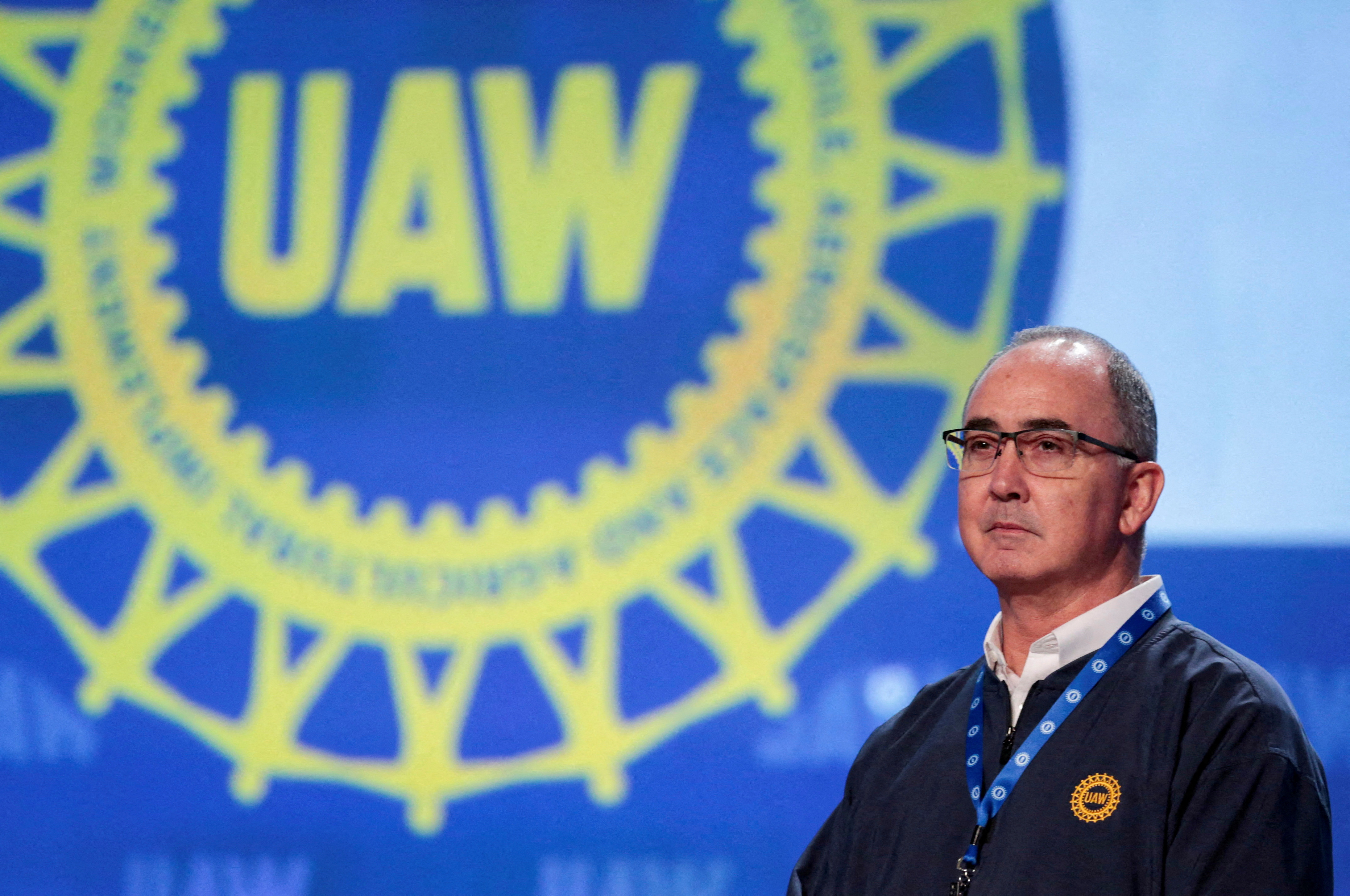
 Shawn Fain

UAW President Shawn Fain chairs the 2023 Special Elections Collective Bargaining Convention 

Another area where Fain has disrupted tradition is in his approach to labor negotiations. He has shown a willingness to work collaboratively with automakers to find solutions that benefit both workers and the industry as a whole. This approach is in stark contrast to the adversarial stance that has often characterized labor negotiations in the past. Fain recognizes that the success of the automotive industry is intertwined with the well-being of its workers, and he is committed to finding common ground.

While Fain's disruption of Detroit's labor tradition has been met with some resistance from within the union, it is clear that he is not afraid to challenge the status quo in order to usher in a new era for the UAW. His efforts to clean up the union's image, promote
inclusive, and foster collaboration with automakers are all steps in the right direction.

                                                                                   Labour (Labor) America


In conclusion,

Shawn Fain's leadership of the UAW represents a significant departure from tradition in Detroit's labor landscape. His commitment to transparency, inclusive, and collaboration is reshaping the way the UAW operates and interacts with the automotive industry. While there may be challenges along the way, Fain's vision for the future of the UAW offers hope for a stronger and more resilient labor movement in the heart of the Motor City.

"China's G20 Chairmanship Concerns: Why Should the US Go First Again?"

Post by:- Mahesh B. L.

China Questions Why The US Should Get the First Shot to Chair G20 Again ?


Introduction

The G20, or Group of Twenty, is a forum consisting of the world's major economies. It serves as a platform for discussing and coordinating global economic policy. Since its establishment in 1999, the
G20 has played a pivotal role in addressing critical global issues. One of the key responsibilities within this forum is the rotating chairmanship, where a member nation presides over G20 meetings and sets the agenda for the year. In recent years, China has raised questions about why the United States should automatically assume the role of chair, and whether it is time for a reevaluation of this tradition. This blog explores China's perspective on this matter, considering its implications for global governance and international relations.


The Significance of the
G20

Before delving into 
China 's concerns about the chairmanship of the G20, it's important to understand the significance of this global forum. The Summit represents a diverse group of nations, including major economic powerhouses like the United States, China, Germany, Japan, and others. Together, these countries account for a significant portion of the world's economic output, trade, and population.

The G20's primary objectives include:

1. Economic Cooperation:- 
G20 members discuss and coordinate economic policies to address global challenges such as financial stability, economic growth, and sustainable development.

2. Financial Stability:-  The Summit plays a crucial role in responding to financial crises, promoting international financial stability, and reforming global financial institutions.

3. Trade and Investment:-  Discussions within the
G20 framework aim to promote open and fair international trade and investment.


4. Development:-  The Summit addresses issues related to global development, poverty reduction, and the Sustainable Development Goals (SDGs).

5. Climate Change:- Environmental sustainability and climate action are also on the
G20 agenda, particularly since the adoption of the Paris Agreement in 2015.

6. Global Governance:- The G20 provides a platform for addressing global governance challenges and fostering cooperation among member states.

USA has importance in G20

Modiji Welcoming Joe Biden


The G20 Chairmanship Rotation

One of the distinctive features of the
G20 is the rotational chairmanship. The chairing nation is responsible for hosting and presiding over G20 meetings throughout the year and has the authority to set the agenda. The chair also plays a crucial role in facilitating discussions and negotiations among member states. Historically, the chairmanship has followed a predetermined order, with the United States scheduled to hold the position in 2022.

China's Perspective on the
G20 Chairmanship

China 's questioning of the United States' automatic assumption of the G20 chairmanship is rooted in several key factors:

 Modi's Opening Speech in G20

Modi’s G20 opening fuels talk of India being officially renamed ‘Bharat’


1. Shift in Global Economic Power:- Over the past few decades,
China has experienced remarkable economic growth, becoming the world's second-largest economy. This shift in economic power has led China to assert itself more prominently on the global stage. Consequently, it believes that the chairmanship should reflect this new economic reality and allow for greater diversity in leadership.

2. Emerging Multi polarity:- The world is experiencing a shift towards a more multi polar global order, where multiple nations hold significant influence. 
China 's rise, along with the resurgence of Russia and the strengthening of regional powers, challenges the notion of a uni polar world dominated by the United States. In this context, China argues that G20 leadership should be more inclusive and representative.

3. Calls for Reform:- China has been a vocal advocate for reforming international institutions to make them more equitable and reflective of contemporary global dynamics. This stance extends to the 
G20, where China calls for a reconsideration of the chairmanship rotation system to ensure fairness and effectiveness.

4. Changing Geopolitical Dynamics:-  Geopolitical tensions between the United States and
China have increased in recent years. These tensions spill over into international organizations and forums, including the G20China 's questioning of the chairmanship reflects its desire to reduce what it sees as an undue influence of the United States in shaping the global economic agenda.

China nowadays is facing with Superiority Complex

Potential Implications

China's questioning of the United States' automatic chairmanship of the G20 carries significant implications for global governance and international relations:

Modi & Xi  jinping

India studying potential responses to a hypothetical Chinese invasion of Taiwan, amid escalating tensions with China. (REUTERS)


1. Enhanced Representation:- A shift in the chairmanship rotation system could lead to greater representation of emerging and regional powers within the G20. This, in turn, might result in more inclusive and balanced discussions and decisions.

2. Geopolitical Tensions:- The issue of
G20 chairmanship has the potential to exacerbate geopolitical tensions between the United States and China. As both nations jockey for influence, it may lead to more contentious negotiations and a challenging environment for consensus-building within the G20.

3. Reform of International Institutions:-  China's stance on the
G20 chairmanship is part of a broader call for reforming international institutions to better reflect contemporary global realities. This could stimulate discussions on reform within other organizations as well.

4. Global Economic Governance:- The 
G20's role in global economic governance could be affected if discussions on chairmanship reform become a protracted and divisive issue. This may hinder the group's ability to effectively address pressing economic challenges.

Conclusion


The
G20 serves as a crucial platform for addressing global economic and governance issues. The rotational chairmanship, which has traditionally seen the United States as the next in line, is now facing scrutiny from China, which questions the automatic assumption of this role. China's perspective is rooted in its belief that the G20 should better reflect contemporary global economic and geopolitical dynamics.

While China's call for a reevaluation of the chairmanship rotation system raises important questions about representation and fairness, it also carries the risk of exacerbating geopolitical tensions and affecting the 
G20's effectiveness. The coming years will likely witness continued discussions and debates on this issue, as global powers seek to shape the future of this influential forum.

Ultimately, the 
G20's ability to adapt to changing global realities and address pressing challenges will depend on the willingness of its members to engage in constructive dialogue and find common ground on issues of leadership, representation, and global governance.

Street Beat Showcase: Riding the Hip Hop Dance Wave

Presentation: Hip bounce, a social peculiarity brought into the world in the Bronx, New York City, in the mid 1970s, has risen above its una...