
Attendance to international summits such as BRICS by any world leader, including Vladimir Putin, is contingent on a variety of circumstances such as their schedule, political concerns, and diplomatic relations between countries. I recommend checking trustworthy news sources or official government comments closer to the event date for the most up-to-current and accurate information on whether Putin will attend the BRICS summit in South Africa.
Introduction:
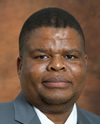
Amidst the scorching heat of the summer of 2017, in Sasolburg, a dystopian nightmare-space marred by severe pollution. It was there that encountered David Mahlobo, the head of South Africa's State Security Agency (SSA). Despite his amiable demeanor, Mr. Mahlobo's agency operated like a corrupt funnel, serving as a cash cow for well-connected cronies, suppressing investigations, and intimidating the president's adversaries. What intrigued further was his curious WhatsApp icon - a cheerful image of Red Square against a Bright Blue sky, symbolizing his fascination with Russia. Little did I know that this obsession with Russia would have significant implications for South Africa's foreign policy.
The Soviet Connection:
Historically, the African National Congress (ANC) received support from the Soviet Union during the apartheid era, cementing ties between the two. While South Africa transitioned into a constitutional democracy after apartheid's fall, remnants of the Soviet influence persisted within the ANC's structure. Over time, disillusionment with liberal democracy, coupled with neocolonialism's failure to uplift the majority of South Africa's Black population, led the country's elite to view Putin's Russia as an alluring alternative.
Foreign Policy Shift:
In recent years, South Africa's foreign policy has leaned towards non-alignment while subtly aligning itself with Russia . International Relations Minister Naledi Pandor has lectured Western leaders on NATO expansionism, criticized Western actions in Iraq and Libya, and emphasized support for the Palestinian cause and African conflicts. However, these stances are often overshadowed by allegations of Russian involvement in South African mining deals that may have benefited the ANC, along with several politicians seeking "medical treatment" in Russia to evade justice.
The Lady R Incident and Economic Sanctions:
The arrival of the Russian ship, Lady R, at the Simons Town port and subsequent allegations of arms shipments from South Africa sparked tensions with the United States. The risk of economic sanctions has since cooled South Africa's enthusiasm for Russia.
BRICS Summit Dilemma:
South Africa's upcoming BRICS summit poses another challenge. While a multi-polar world and competition against Western influence sound appealing, the International Criminal Court's call for Putin's arrest over allegations of Ukrainian child trafficking complicates matters. Should Putin visit South Africa, the country would be obligated to arrest him, potentially sparking a war with Russia.
Russian President Vladimir Putin shakes hands with South African President Cyril Ramaphosa
:format(jpeg)/cloudfront-us-east-1.images.arcpublishing.com/tgam/G6NGNKH5SRIK5E6KSRXAKAZPCA.JPG "https://www.theglobeandmail.com/resizer/owL7X8YExPnvhmjZPB0ZzzKRsQs=/600x0/filters:quality(80):format(jpeg)/cloudfront-us-east-1.images.arcpublishing.com/tgam/G6NGNKH5SRIK5E6KSRXAKAZPCA.JPG")
The Perils of the Putin Fascination:
As South Africa grapples with escalating decline, rampant corruption, and widening inequality, Putin's Russia continues to captivate the country's leadership. However, this fascination risks undermining foreign policy coherence and turning South Africa into a pariah state. Red Square might appear inviting, but indulging in Putin's authoritarianism can have severe consequences for a democracy in turmoil.
Conclusion:
South Africa stands at a crossroads, torn between its Putin fascination and the need to uphold democratic principles. While dreams of a multi-polar world and countering Western dominance are legitimate aspirations, they must not come at the cost of disregarding human rights and international law. As the country confronts its internal challenges, it must carefully tread the path of foreign policy to avoid pariah status and embrace a future that balances pragmatism with moral responsibility.

No comments:
Post a Comment